por Albert Rimola | Dic 12, 2025 | Publication
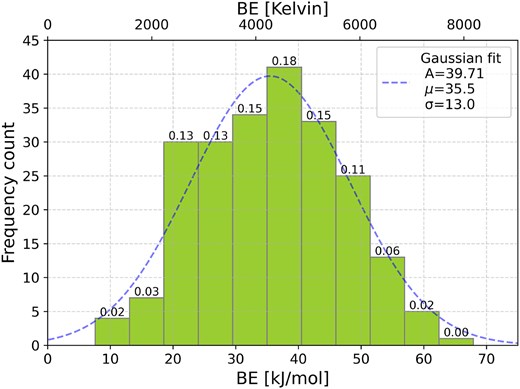
The binding energy distribution of methanol on interstellar ice grains, particularly a low-energy fraction (ca. 2%, 10 kJ mol⁻¹), enables its thermal desorption into the gas phase even in cold cosmic environments, resolving a long-standing observational challenge....
por Albert Rimola | Dic 12, 2025 | Publication
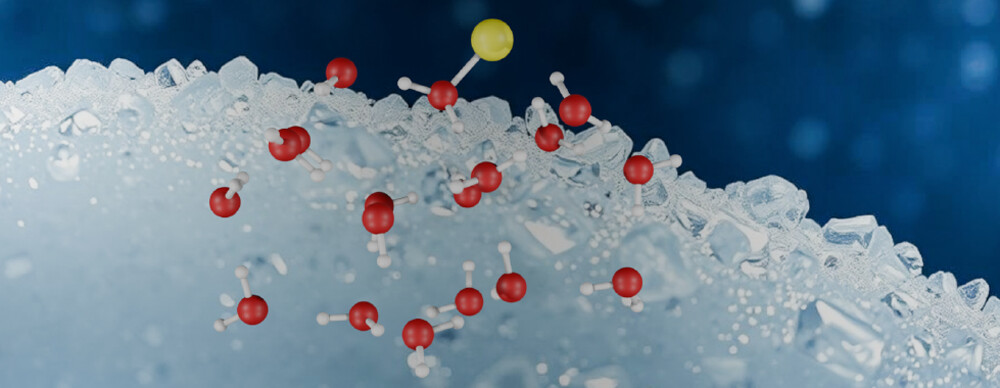
Theoretical simulations of the reaction of excited atomic sulfur (¹D) with water on an 18-molecule ice cluster reveal that the ice environment stabilizes novel products (H₂OS and HOSH) by dissipating energy and altering reaction pathways, demonstrating that gas-phase...
por Albert Rimola | Dic 12, 2025 | Publication
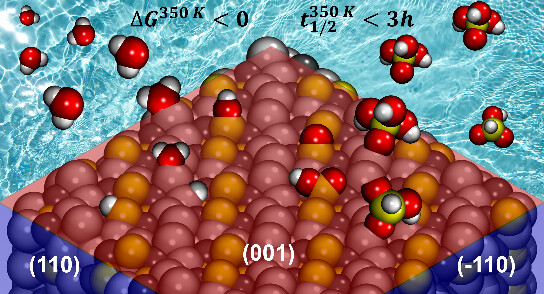
Computational kinetic studies reveal the water corrosion of meteoritic schreibersite (Fe2NiP) to phosphorus-oxygen compounds, a key prebiotic process, can occur on a scale of a few hours at 350 K. Among the biogenic macroelements, phosphorus is the one bringing the...
por Albert Rimola | Dic 12, 2025 | Publication
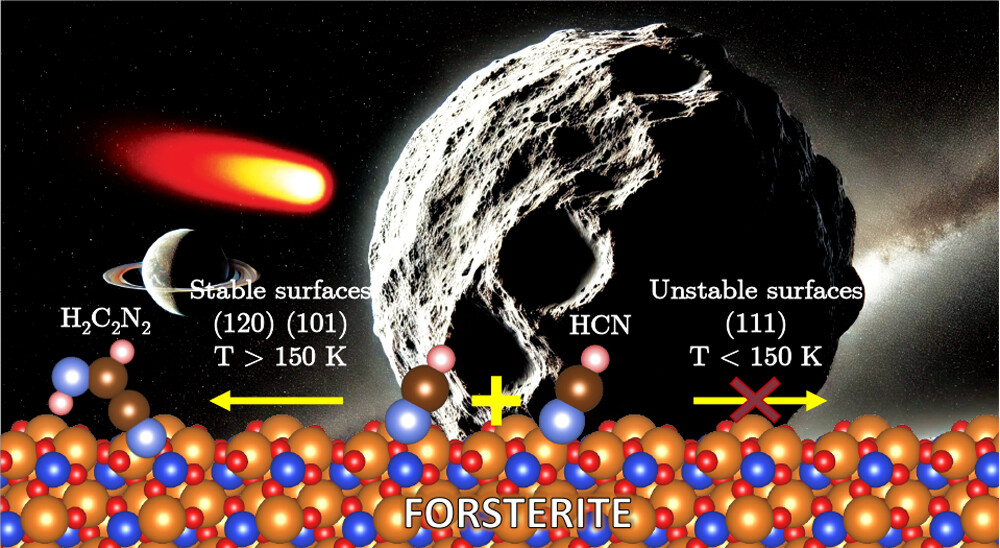
According to quantum mechanical simulations, the less reactive (120) and (101) surfaces of the cosmic silicate forsterite effectively catalyze the formation of prebiotic iminoacetonitrile from hydrogen cyanide by enabling its deprotonation while still allowing...
por Albert Rimola | Dic 12, 2025 | Publication
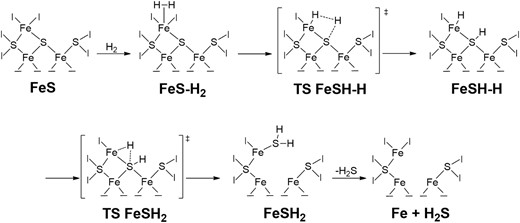
Chondritic meteorites, as analogs for early Solar System dust, can catalytically reduce FeS to H₂S and metallic Fe under hydrogen-rich atmospheres, with implications for early planetary chemistry. Current models of chemical evolution during star and planetary...

por Albert Rimola | Dic 12, 2025 | Publication
Through density functional theory calculations, the mineral Schreibersite from meteorites can thermodynamically and kinetically promote the deprotonation of methanol and water, leading to its own corrosion and the formation of prebiotically significant phosphate and...
